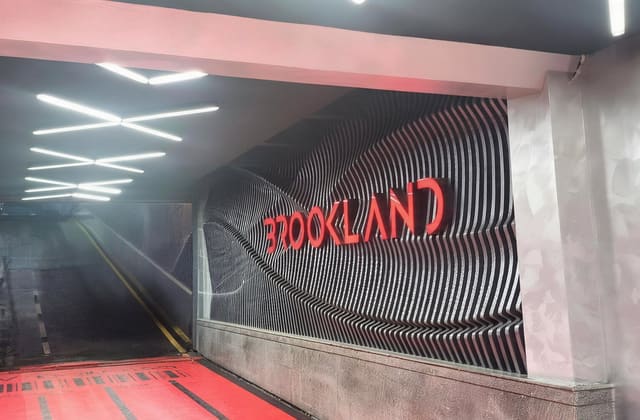
Woodland car park
Underground car park: linear light along the drive lanes, round-the-clock operation.
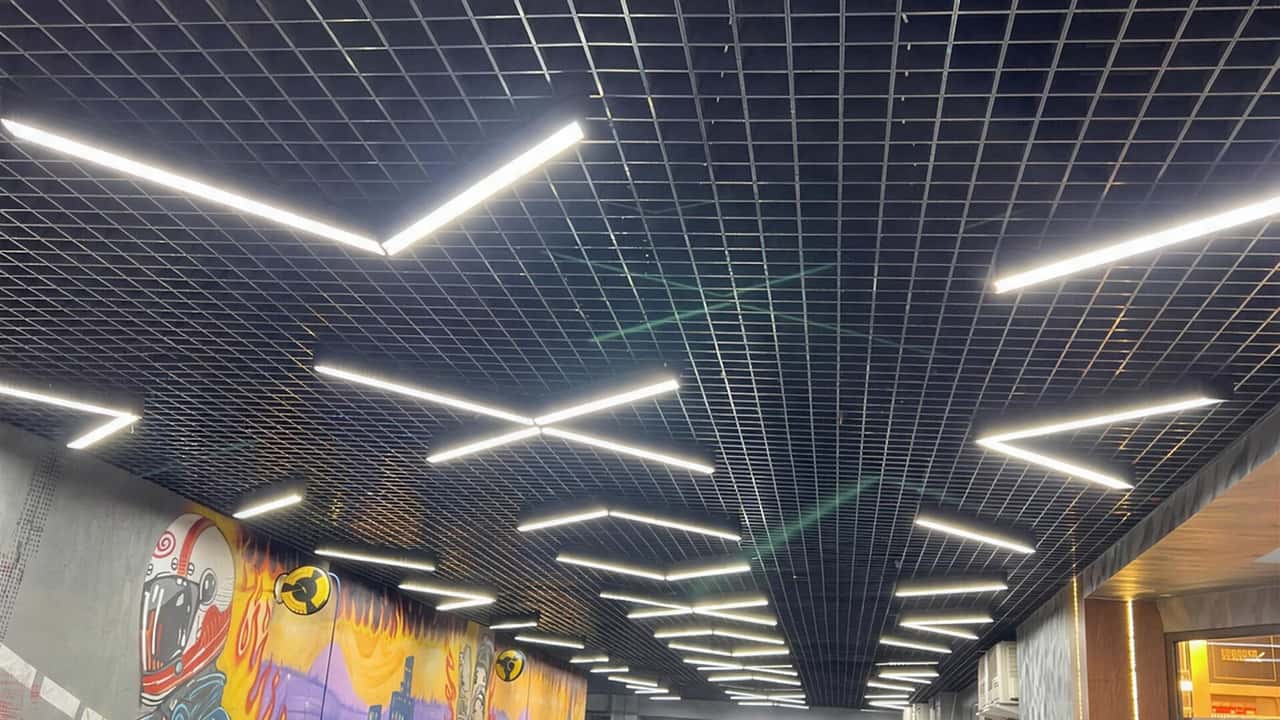
50 lx on the floor under ShNK 2.01.05-24 for enclosed car parks; linear light along the drive lanes, low ceilings, round-the-clock operation.
A car park means a low ceiling, round-the-clock operation and a target that looks modest until you look at uniformity. ShNK 2.01.05-24 sets 50 lx on the floor for parking bays in garages and car parks (app. 9, table 2, item 2b), 75 lx for the enclosed depots of transport companies (item 2a) and 6-20 lx for open car parks (table 21; app. 9, table 2, item 1). Specifications often ask for more on the driveways and ramps, and then we design to the specification. A dip between luminaires reads as a black hole, and at the entrance the eye moves from daylight into darkness: the transition zone is calculated separately.
The ceiling is usually 2.5 to 3.5 m: a point luminaire gives a pool of light beneath it and darkness in between, so the light is run in continuous lines along the driveway.
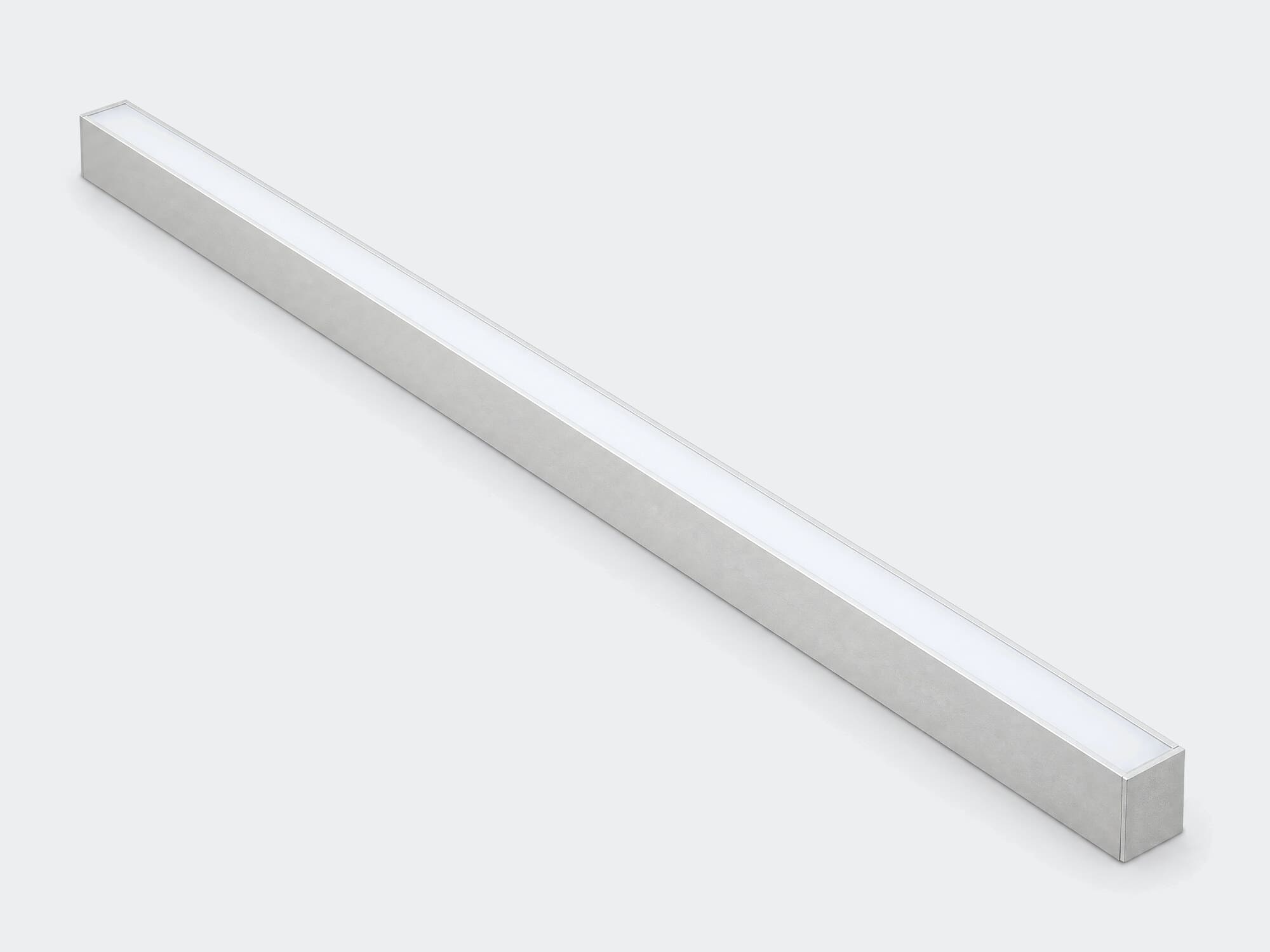
Line is the basis of the solution: a continuous run along the driveway settles the uniformity question by geometry rather than by power. The Ultra 30×40 mm section does not steal headroom on a low ceiling.
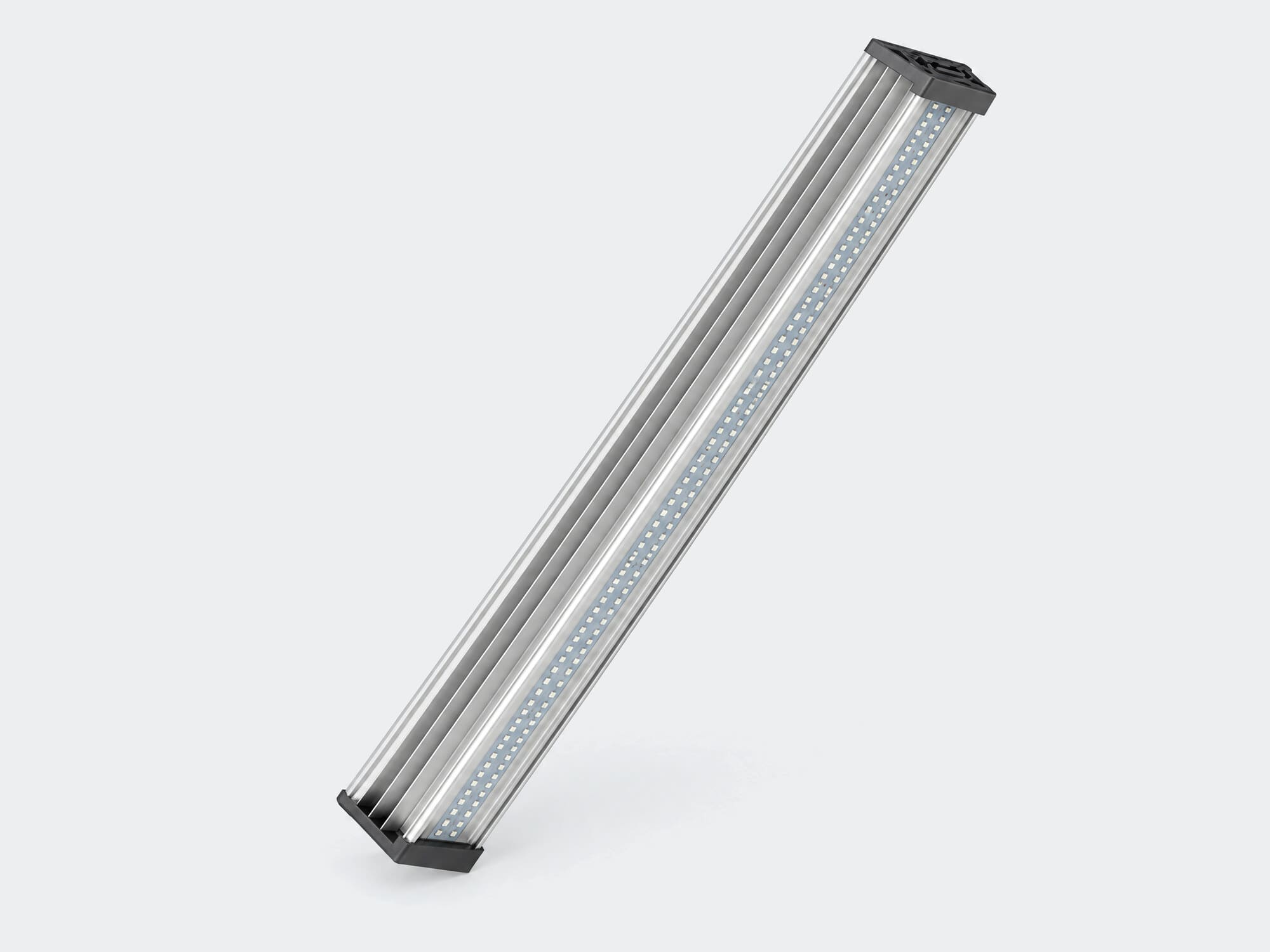
Prom is needed on ramps and in zones with a ceiling above 4 m.
A car park of ≈ 3,000 m², ceiling height 3 m, two driveways:
Flux from the 2018 IES file: Line Ultra 40W 5,600 lm. Utilisation factor method with UF 0.5 (low ceiling, dark surfaces, cars) and MF 0.67 (safety factor 1.5, MF = 1/1.5): 180 × 5,600 × 0.5 × 0.67 / 3,000 ≈ 110 lx, twice the 50 lx target. The target alone would be met by ≈ 80 pcs (≈ 3.2 kW), but continuous runs along the driveways deliver uniformity by geometry; how many to install is decided by the specification and the DIALux calculation.
Before: the same car park on 200 fluorescent 2×36 W fittings at 90 W with magnetic ballasts, ≈ 18 kW. At the nominal lamp flux (6,700 lm) the same assumptions give ≈ 150 lx, and ≈ 100 lx with a louvred fitting efficiency of about 0.65.
After: ≈ 7.2 kW at ≈ 110 lx. The light burns round the clock, 8,760 hours a year, so the difference is ≈ 94,600 kWh a year; with 80 luminaires for the bare target, ≈ 129,600 kWh. In UZS, by the tariff on the date of the calculation (see the savings calculator).
A calculated estimate under the stated assumptions, not guaranteed until measured on site. Figures marked ≈ are estimates.
| Space or zone | Target, lx | Plane and note |
|---|---|---|
| Enclosed car parks and garages, parking bays | 50 | H-0.0 on the floor, category VIIIv; app. 9, table 2, item 2b |
| Enclosed depots of transport companies | 75 | H-0.0 on the floor, category VIIIb; app. 9, table 2, item 2a |
| Open parking areas on the premises | 10 to 20 | on the surface: unheated 10, heated 20; app. 9, table 2, item 1 |
| Open street-side car parks and the lanes between them | 6 | average horizontal; table 21 |
Values per ShNK 2.01.05-24 “Natural and artificial lighting” (Ministry of Construction order No. 1/2-68 of 26 September 2024, Ministry of Justice registration No. 309 of 25 October 2024, text at lex.uz/ru/docs/7218587), checked against the text on 17 September 2026; the clause and table are given in every row. H is the horizontal plane at the stated height above the floor, V is vertical. The design target is set by your technical specifications, and we run the DIALux calculation against it.
The catalogue has the full specification table, prices in UZS and the IES files.
Send a floor plan or your technical specifications: we return a DIALux calculation, a bill of materials and a payback period. Free of charge.